

Overview
The Center for Cardiometabolic Risk Reduction in South Asia Study (CARRS) is a state-of-the-art, population-based cohort of South Asians to address existing and emerging questions related to cardio-metabolic disease.
Heart disease and diabetes are the leading cause of morbidity and mortality worldwide. India and the South Asian region broadly are at the epicenter of the cardiometabolic diseases epidemic.
The CARRS Cohort follows a diverse population-based sample of more than 20,000 South Asian adults age ≥ 20 years, with ongoing follow-up for clinical cardiovascular risk factors, clinical disease, and mortality. The cohort was recruited in two waves, CARRS-1 in 2010-11 and CARRS-2 in 2015-16, and has high retention rates (70-85% annual follow-up, 88% hybrid tele/in-person attendance even during COVID, and >95% have at least one follow-up or death in 10 years of follow up) with a biorepository of 360,000 stored samples.
Quick Facts

Cohort
> 20,000 South Asian adults
> 20 years

Recruitment
CARRS 1 (2010-11)
CARRS 2 (2015-16)

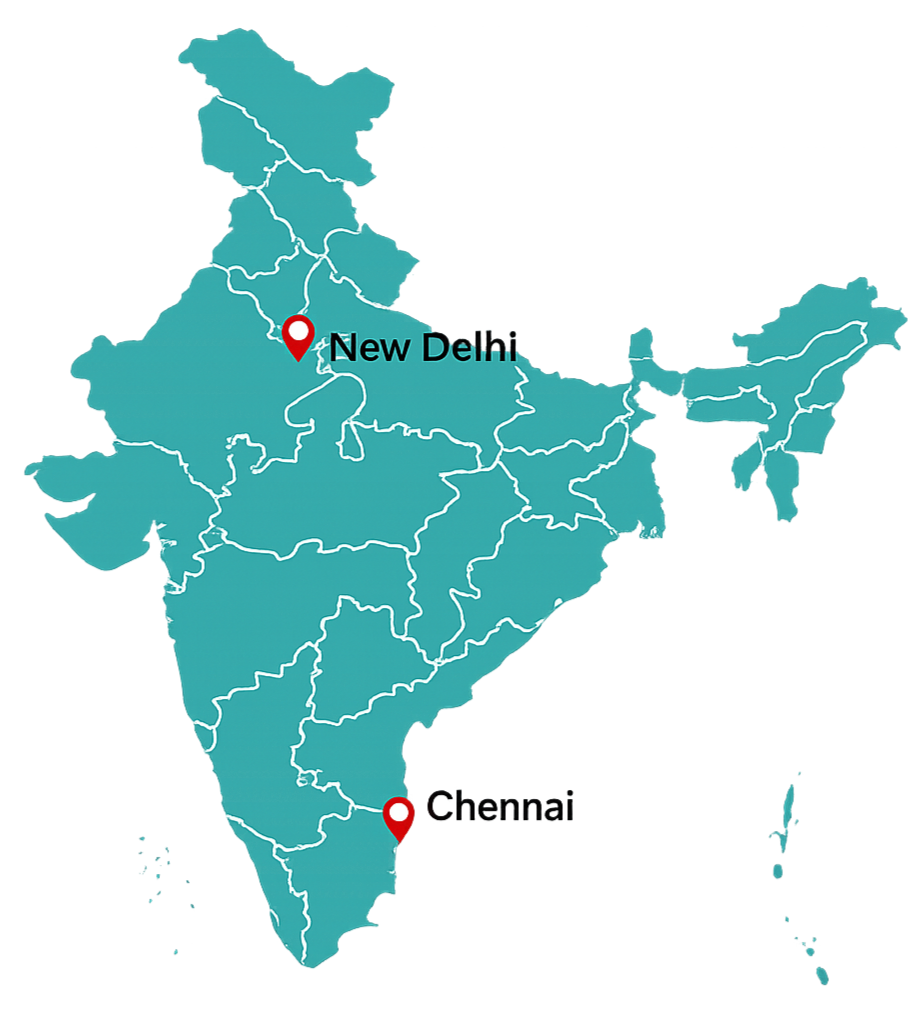
Study Sites
Chennai, India
Delhi, India

Stored Samples
360,000 samples
Research Areas

Precision-CARRS
Aims to transform the current cardiovascular disease risk prediction model to a more personalized, precise approach that enables early detection.

CARRS Brain
Aims to characterize midlife cognitive impairment and identify risk factors for Alzheimer's disease and related dementias in participants aged 40 and above.

CARRS Diabetes
Aims to examine genomic and metabolomic markers linked to prediabetes, T2D phenotypes, and glycemic progression in South Asians.
📊100+ Conference Abstracts
Presented at major international
scientific meetings
Peer-reviewed research advancing cardiometabolic science
🌎 Global Dissemination
Findings shared through scientific and lay media
High impact
investment in bidirectional (India - US) research capacity building
Abstracts presented at international conferences
100+
Abstracts presented at international conferences
70+
Peer-reviewed publications
Impact of CARRS
📄 70+ Publications
🎓 80+ Investigators Trained
Supporting the next generation of researchers
🤝 India–US Capacity Building
Sustained investment in bidirectional collaboration
🏛 Training Grant Integration
Multiple institutional grants connected to the cohort