


CARRS Brain
Dementia is the defining public-health challenge of our aging world.
7.4%
of adults aged 60+—nearly 8.8 million people—are living with dementia
150M+
By 2050, more than 150 million people globally will be living with dementia.
Urgent
Critical need for population specific data
To address this gap, CARRS is capturing risk profiles and applying phenotyping strategies that are rigorous, scalable, and internationally comparable.
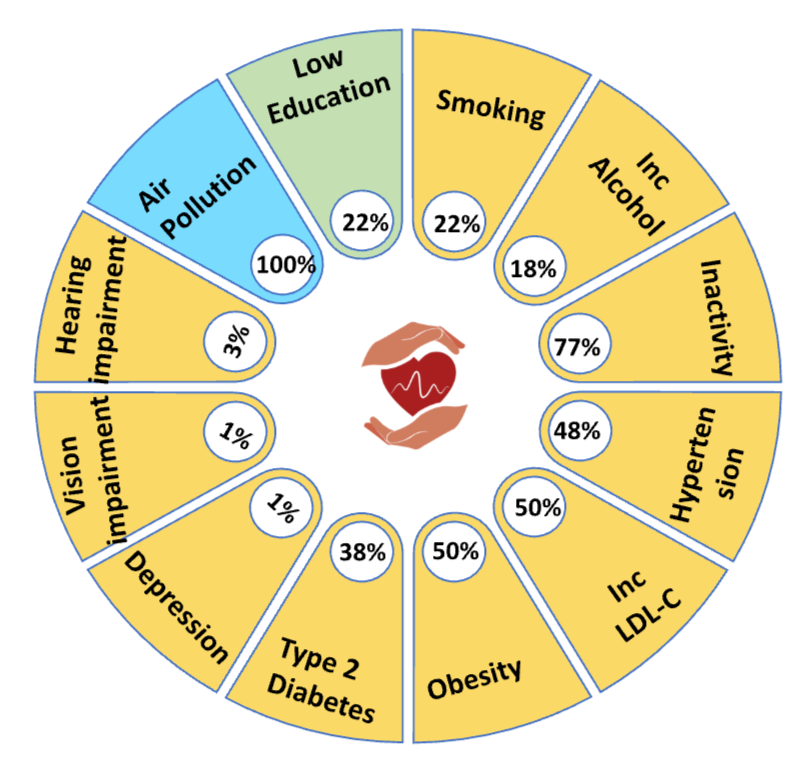
Baseline prevalence of modifiable dementia risk factors
South Asia is poised to account for a substantial share of the future global dementia burden.

Purpose of the Study

Understand Life-Course Origins
To understand how Alzheimer’s disease and related dementias develop across the life course in South Asian populations—long before clinical symptoms emerge.
Integrate Multimodal Risk

To integrate genetic, cardiometabolic, socio-behavioral, environmental, and brain phenotyping data to map heterogeneous pathways to cognitive impairment.

Predict and Prevent
To identify high-risk profiles and develop prediction frameworks to inform dementia prevention strategies tailored to South Asia.
CARRS-Brain extends the parent cohort using a three-tiered phenotyping framework that balances scalability with in-depth characterization:
Study Framework

Tier (1) – Genomics and plasma biomarkers
Stored baseline biospecimens are used for whole-genome sequencing and Alzheimer’s disease and related dementias (AD/ADRD) plasma biomarker assays.

Tier (2) – Follow-up cognitive and biomarker assessment
At a dedicated follow-up visit outside routine CARRS examinations, participants complete digital cognitive phenotyping and repeat blood collection.

Tier (3) – Multimodal deep phenotyping (age ≥50 years)
A subset of participants undergo comprehensive evaluation, including
Population-validated neuropsychological testing
Brain MRI
Wearable-based assessment of physical activity, stress, and sleep
Retinal imaging
Pillars of Data Collection

Neurocognitive Assessment

Brain Imaging

Retinal Imaging
Wearables

Lab Measurements